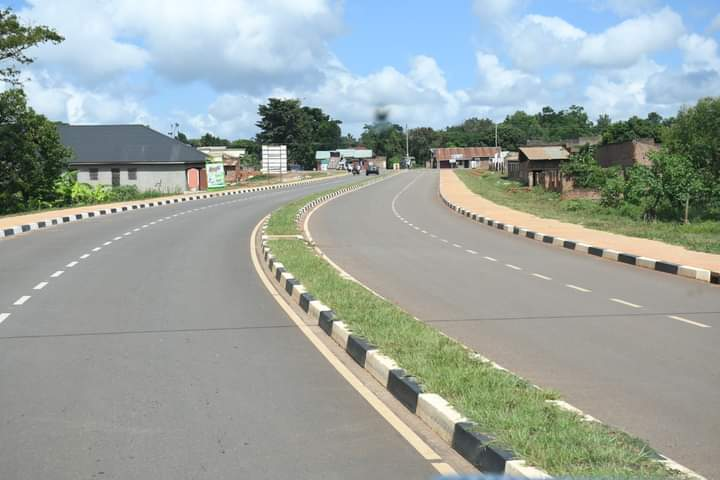
Ngora District, home to an estimated 213,777 people as of 2024, is undergoing a remarkable transformation thanks to improved infrastructure, particularly its expanding road network, which is easing transport, enhancing trade, and improving livelihoods across the Teso Sub-region.
Once considered isolated, Ngora is now linked to major trade routes through tarmacked roads connecting Soroti, Katine, Otuboi, and Lira. These roads have not only shortened travel times but also opened up markets for farmers and traders, attracting new business ventures.
“Before the road was tarmacked, it would take us almost two hours to reach Soroti, especially during the rainy season. Now, trucks move easily, and we sell our goods faster and at better prices,” Mary Akurut, a produce trader in Ngora Town revealed.
The improved roads have strengthened Ngora’s connection to both the wider Teso and Lango sub-regions, expanding economic opportunities and market access.
Local leaders have credited the government’s continued investment under the National Resistance Movement (NRM) for this progress.
“We remain dedicated to delivering safe, efficient, and sustainable infrastructure to drive Uganda’s growth in the Teso Sub-region,” Michael Epiot, the Ngora District Engineer stated.
“Expect improved connectivity and enhanced safety all across our transportation network here and beyond.This development will improve livelihoods and unlock business potential in both urban and rural communities,” the Ngora District Engineer added.
According to Epiot, sustainable road development is central to Ngora’s economic growth. The district currently is maintaining over 200 kilometers of district roads, 30 kilometers of urban roads, and 184 kilometers of community access roads.
“The government’s focus on rural connectivity and access to basic utilities is yielding visible results. Roads, power, and water are reaching more people than ever before in Ngora District,” he noted.
“The government’s focus on rural connectivity and access to basic utilities is already showing tangible results,” Epiot noted.
“While there is still work to be done, the progress is clear, roads, electricity, and water are now reaching more people than ever before in Ngora District,” he added.
As Uganda continues to prioritize infrastructure development, Ngora District stands out as a growing example of how enhanced connectivity and basic services can transform local economies, open up rural communities, and uplift lives across the Teso Sub-region.